
General Dentistry
Dental Cleaning in Livermore
Most people think a dental cleaning is just a quick polish. It’s actually a lot more involved than that, and each step has a real purpose.
45-60
minutes per visit
5
steps every cleaning
6 mo
recommended schedule
Step by Step
What a Professional Cleaning Actually Involves
Every patient gets the same thorough process — no shortcuts, no rushing. Even people who brush twice a day miss spots, especially along the back molars and behind the lower front teeth.
01
Exam & Check-in
Our hygienist looks at your teeth, gums, and mouth before anything else. We’re checking for swelling, bleeding, or spots that need extra attention. If it’s been a while since your last visit, we’ll talk about what you’re noticing at home too.
02
Scaling
This is the part most people picture. We use hand instruments and an ultrasonic scaler to remove plaque and tartar buildup above and below the gumline. Tartar can’t be brushed off at home. It has to be removed by a trained professional.
03
Polishing
After scaling, we polish every surface with a gritty paste that buffs away surface stains. Your teeth feel incredibly smooth afterward.
04
Flossing
We floss between each tooth to clear anything the scaling and polishing missed. This also lets us spot areas where your gums might be sensitive or inflamed.
05
Fluroide Treatment
For patients who want it, we apply fluoride to help strengthen enamel and protect against cavities for months.
Your Hygienist Decides
Standard Cleaning vs. Deep Cleaning
Not every mouth needs the same thing. Your hygienist starts by checking your gums, reviewing your X-rays, and measuring the small pockets around each tooth before recommending anything.
Standard Cleaning
The routine visit. We remove plaque and tartar from above the gumline, polish your teeth, and send you home feeling fresh. Right for most patients who come in regularly.
Pocket depth
1-3mm (healthy)
Gum condition
No active disease
Frequency
Every 6 mo
Duration
45-60 min
Deep Cleaning
Goes below the gumline to clean root surfaces and help gums reattach. A standard cleaning won’t reach the bacteria trapped in deep pockets — this one does.
Pocket depth
4mm >
Gum condition
Early-mod disease
Frequency
Every 3-4 mo
Duration
60-90 min
How We Decide
Factors your hygienist considers
Dr. Chuang reviews each case personally before any treatment begins — always in plain language, never pressure.
Pocket depth readings around each tooth
Amount of tartar buildup below the gumline
Whether your gums bleed during probing
Bone loss visible on your digital X-rays
How long it's been since your last cleaning
New Here?
What to Expect at Your First Cleaning Appointment
Your visit starts at the front desk — insurance and billing handled right away so you’re not thinking about paperwork while trying to relax. Then we bring you back to a treatment room that feels more like a spa than a clinic.
Digital X-Rays
We take digital x-rays of your teeth and jaw. These give Dr. Chuang a clear picture of what's happening below the gumline.
Full Routine Exam
Dr. Chuang does a full routine exam, checking every tooth and looking at your gums, tongue, and soft tissue.
Scaling
Your hygienist removes plaque and tartar buildup using gentle hand instruments and an ultrasonic scaler.
Polish
We polish your teeth to smooth out surface stains.
Fluoride Treatment
A fluoride treatment goes on last to strengthen your enamel before you head home.
Anxiety? We offer nitrous oxide & oral sedation
~1 hr for first visit
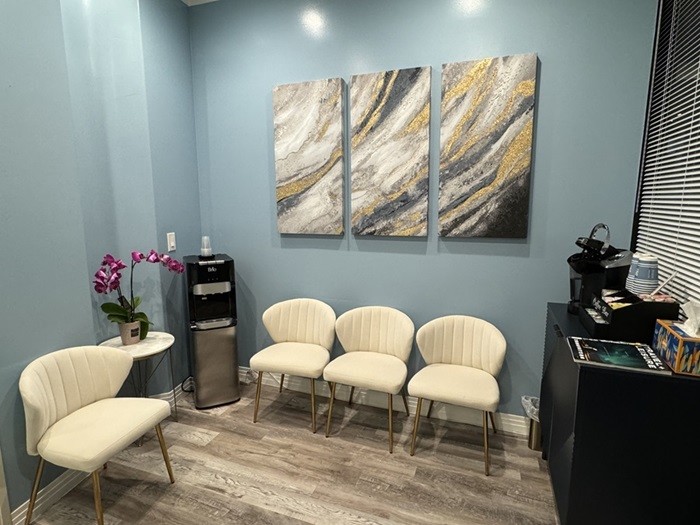
Our office on E Stanley Blvd was designed to feel more like a spa than a clinic — warm lighting, comfortable seating, a calm atmosphere. If anxiety kept you away before, this visit will feel different.
Everyone Benefits
Who Benefits Most from Regular Teeth Cleanings
We see patients in Livermore from every walk of life, and certain groups benefit more than others from staying on a regular dental cleaning schedule. If any of these sound like you, it’s worth paying attention.
Coffee & Wine Lovers
Livermore’s wine country is right in our backyard. If you enjoy a glass of red from a local vineyard or grab a morning coffee on First Street, staining builds up fast. Regular dental cleaning keeps your smile bright without needing whitening every few months.
People with a History of Gum Disease
Once you’ve had gingivitis or needed scaling and root planing, your gums need closer attention going forward. Skipping cleanings lets bacteria settle right back in.
Kids & Teens
Young mouths change quickly. We do pediatric dental cleanings for a reason, growing teeth trap food in new spots every few months.
Anyone with Diabetes or Heart Concerns
Research from the American Dental Association links gum inflammation to higher risks for systemic health problems. Keeping your mouth clean supports your whole body.
Patients Who Feel Anxious About Dental Work
This one surprises people. But the more often you come in for a simple cleaning, the less likely you’ll need bigger procedures later. Short, calm visits beat long, stressful ones every time.
Even Daily Brushers & Flossers
You still need professional dental cleaning. Your toothbrush can’t reach below the gumline. Period. The tools we use remove calcified buildup that no amount of home care can touch.
Haven’t been in years? No judgment from our team — we see this every single week. Dr. Chuang makes those first-visit-back appointments as relaxed as possible. Our office has a spa-like feel that helps people breathe a little easier in the chair.
Home Care
Protecting Your Smiles Between Professional Cleanings
What you do at home between visits matters just as much as what we do in the chair. You don’t need a complicated routine. You need a consistent one.
Daily Habits That Actually Helps
Brush 2× a day — 2 full minutes
Brush twice a day for two full minutes. Most people rush through it in about 45 seconds. Set a timer if you need to.
Floss once a day
Floss once a day.. Nobody loves flossing. But it reaches spots your toothbrush can't, and those spots are where gum disease starts.
Use fluoride toothpase
Use a fluoride toothpaste. It strengthens enamel and helps prevent cavities between visits.
Drink water after meals
Drink water after meals. Livermore's tap water contains fluoride, so even a few sips help rinse away food particles and protect your teeth.
Watch for These warning signs
These things are manageable when we catch them early. Waiting turns a simple fix into something bigger. If any of these sound familiar, give us a call. Don’t wait for your next scheduled dental cleaning to bring it up.
- Gums that bleed when you brush or floss
- Tenderness along the gumline near back teeth
- Persistent bad breath that doesn’t clear up
- Sensitivity to cold that lingers more than a second or two
Frequently Asked Questions
How often should I get a dental cleaning in Livermore?
Most people need a dental cleaning every six months. That schedule works well for patients with healthy gums and no major buildup. If your hygienist finds deeper pocket readings or signs of early gum disease, we may suggest coming in every three to four months instead. Livermore’s dry climate can affect saliva flow, which sometimes speeds up plaque buildup. Staying on a consistent schedule is the best way to catch problems before they grow.
What's the difference between a regular cleaning and a deep cleaning?
A regular cleaning removes plaque and tartar from above the gumline. A deep cleaning, called scaling and root planing, goes below the gumline to clean the root surfaces. Your hygienist decides which one you need based on your pocket depth measurements. Pockets of four millimeters or deeper usually mean a standard cleaning won’t reach the bacteria causing the problem. We explain what we find before recommending anything different.
What should I do to prepare for my dental cleaning appointment?
Brush and floss before you arrive — that’s really all you need to do. Bring your insurance card and a list of any medications you’re currently taking. If it’s your first visit, arrive a few minutes early to handle paperwork at the front desk. You don’t need to avoid eating beforehand unless you’re also having other dental work done that day. Wearing comfortable clothes helps too, since you’ll be leaning back for about an hour.
Is it normal to have sensitive teeth after a dental cleaning?
Yes, some sensitivity after a cleaning is completely normal. Removing tartar buildup exposes parts of your teeth that were covered before. That newly exposed enamel can feel sensitive to cold or air for a day or two. Using a soft-bristle toothbrush and a sensitivity toothpaste helps. If the sensitivity lasts more than a week or feels sharp, let us know. That’s worth a follow-up look to rule out anything else going on.
I haven't been to the dentist in a few years — will my cleaning take longer?
Yes, it likely will. Patients in Livermore who haven’t had a cleaning in a year or two often have more tartar buildup, especially along the back molars and behind the lower front teeth. That means the scaling step takes more time. Your first visit after a long gap might run closer to 90 minutes instead of the usual hour. That’s not a problem — we’d rather be thorough. We’ll also check your pocket depths to make sure a standard cleaning is still the right fit.
Will my dental cleaning include a fluoride treatment?
Fluoride treatment is available at the end of your cleaning and takes just a few minutes to apply. It helps strengthen your enamel and protect against cavities for several months after your visit. It’s especially helpful if you’ve had cavities before or if your hygienist notices early signs of enamel wear. We offer it to patients who want it — it’s not automatically required. Just let your hygienist know if you’d like to include it.
Livermore Dental Spa
Ready for a fresh, clean smile?
New patients are always welcome. Book your cleaning today!